
Have you caught your dog chattering its teeth and wondered what’s going on? You’re not alone. Dogs can chatter their teeth for a range of reasons—and, more often than not, it’s nothing to fret over. Still, it’s important to know what’s behind this behavior so you can respond appropriately if needed.
Here, you’ll find the most common explanations and practical solutions tailored to each scenario, to help your furry companion stop chattering those teeth—and restore some peace and quiet.
Your Dog Chatters Its Teeth Because It’s Cold
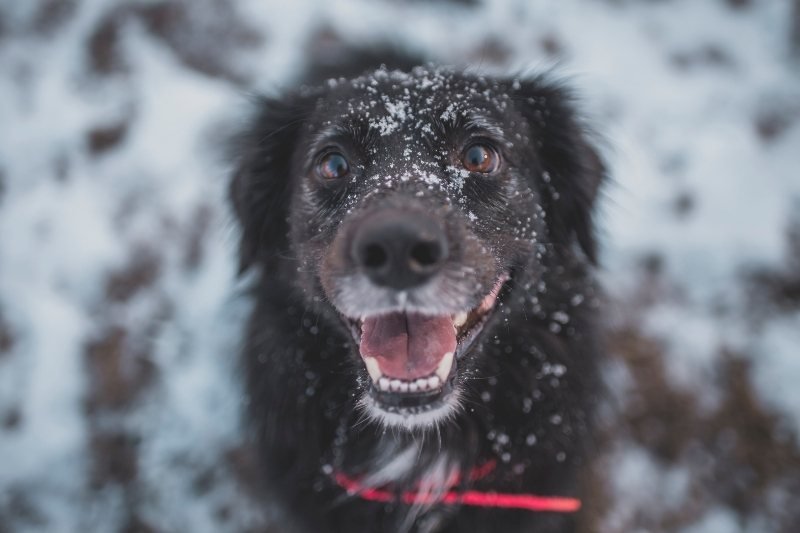
Dogs can be highly sensitive to chilly weather. During winter walks, you may notice your pup’s teeth beginning to chatter in response to the cold. If you see this happening, don’t hesitate—head inside and warm your dog up as soon as possible.
Read also: Dogs and snow—everything you need to know
But what if your dog’s teeth are chattering when it’s mild outside (over 15°C/59°F)? Be alert for potential issues with their coat or weight. Thin, poor-quality fur or being underweight can leave a dog vulnerable to even slight temperature changes, making it much harder for them to keep warm.
It’s a Burst of Excitement
Sometimes a dog’s teeth chatter simply because it’s brimming with excitement. Maybe it happens during an energetic play session, when you return from a trip, or as mealtime approaches. A closer look at their eyes will often reveal widened pupils—a clear sign of excitement overload.
Excitement, while usually positive, can become mentally overstimulating for a dog, making self-regulation difficult. In these moments, it’s helpful to slow things down and help your dog settle. Pause whatever is causing the hyperactivity, move your pup to a serene space, and give some gentle pets until calm is restored.
Your Dog Is Afraid
A scary experience can also bring on teeth chattering in dogs. The source of fear could be anything from meeting a stranger or hearing a strange noise, to thunderstorms or clashing with another dog. This fear-driven chattering is often accompanied by telltale signs, such as:
- Enlarged pupils
- Heavy drooling
- Raised hackles
- Accidents indoors
- And more…
If you can pinpoint the cause of the fear, reassure your dog immediately and offer them calm and rest. When there’s nothing obvious in the environment to explain their anxiety—or if your dog frequently seems scared for no clear reason—this isn’t normal. In these cases, seek out a canine behaviorist to evaluate what’s going on.
Sensing Pheromones
Ever notice dogs sniffing each other’s behinds? They’re detecting and deciphering pheromones—chemicals that reveal age, gender, diet, health, emotional states, and more. To interpret these pheromones, dogs might rapidly open and close their mouths, leading to that characteristic teeth chattering. It’s a completely natural, physical reaction called the “flehmen response” (the word comes from German) and serves as a key part of canine introductions. No need to intervene—this behavior helps dogs get to know each other.
Conclusion
There are several reasons your dog may chatter its teeth—and in the majority of cases, it’s a normal, environmental response: cold weather, excitement, fear, or meeting new canine friends. Most situations can be addressed with simple, practical solutions. Still, if you notice your dog’s teeth chattering very often, it’s wise to schedule a check-up with your veterinarian, just to be sure there’s no underlying health issue.
