
Introduction
The Dobermann, often called the Doberman, is a powerful and loyal dog breed known for its intelligence, athleticism, and strong bond with people. Originally developed for protection and working roles, the Dobermann combines physical strength with high trainability. This versatile breed thrives in families and professional roles when given proper structure, training, and socialization.
Origin and History
The Dobermann was developed in the late 19th century in Germany. A tax collector and dog enthusiast sought to create a breed that combined courage, intelligence, and loyalty for protection during his work. Through careful breeding of several strong, alert breeds, the Dobermann emerged as an efficient guardian and companion dog. Over time, its reputation as a working breed expanded into roles such as police work, search and rescue, and competitive obedience.
Temperament and Personality
Dobermanns are widely appreciated for their loyal, confident, and attentive nature. They tend to form deep bonds with their families and are known for their protective instincts. Despite public perceptions of them as intimidating, well-raised Dobermanns are affectionate, responsive, and eager to please.
Key Behavioral Traits
- Intelligent and trainable: They learn quickly and excel at structured training.
- Loyal and devoted: Strong attachment to their owner and family.
- Alert and watchful: Naturally aware of their surroundings.
- Energetic and focused: Enjoy physical and mental challenges.
With appropriate socialization and guidance from an early age, Dobermanns typically develop balanced and confident temperaments.
Physical Characteristics
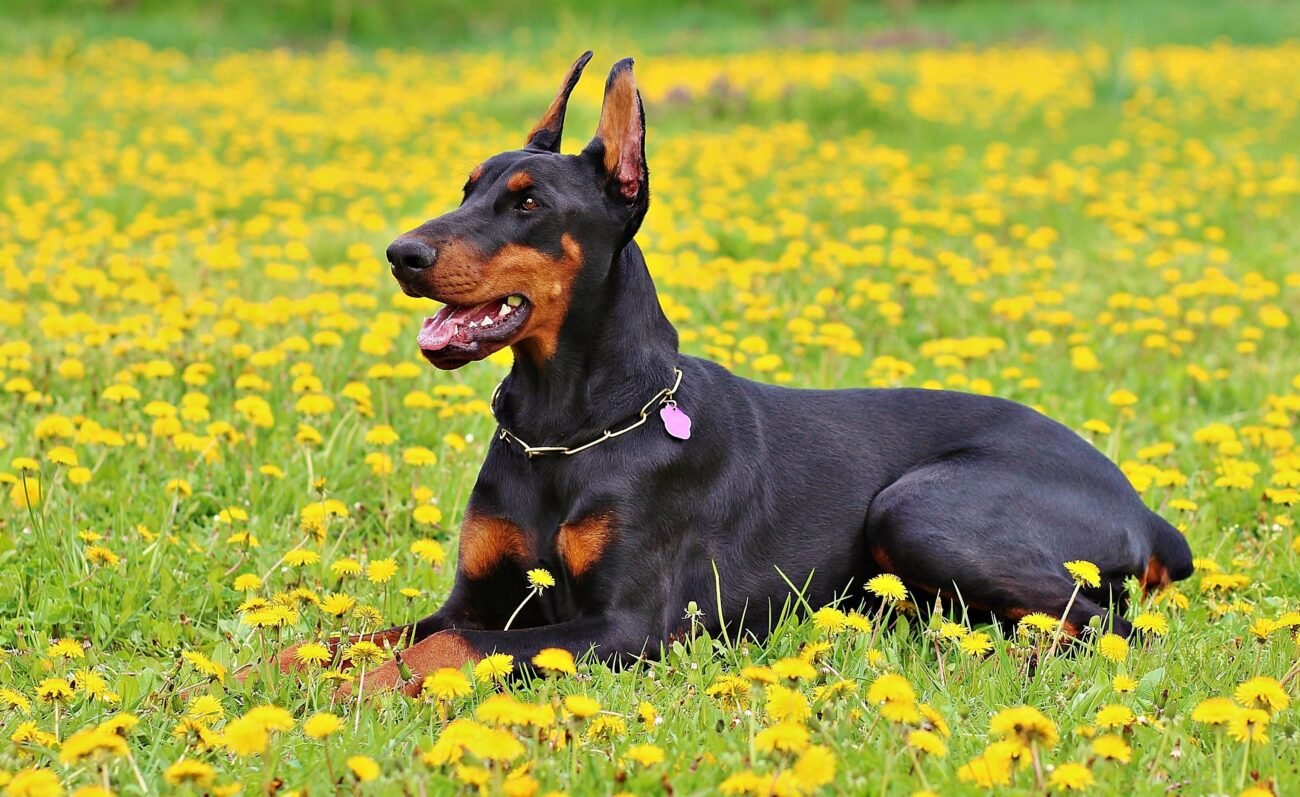
Dobermanns are medium to large dogs with a sleek and muscular build. Defining physical traits include:
- Height: Males typically taller than females
- Body: Athletic and streamlined
- Coat: Short, smooth, and close-lying
- Color: Dobermanns are often black, red, blue, or fawn with rust markings
- Expression: Alert and keen, reflecting intelligence
This combination of strength and agility reflects the breed’s working origins.
Health and Lifespan
The average lifespan of a Dobermann is around 10 to 13 years. Responsible breeders focus on breeding for sound health to reduce the risk of genetic issues. Some health considerations for the breed include:
- Heart conditions: Certain cardiac issues may occur in some lines.
- Joint concerns: As with many large breeds, hip and elbow health should be monitored.
- Skin and coat care: Their short coat is low-maintenance but benefits from regular grooming.
Routine veterinary care, balanced nutrition, and appropriate exercise help support overall health throughout the dog’s life.
Nutrition and Feeding
A Dobermann’s diet should meet the needs of a large, active, and muscular dog. Key aspects of feeding include:
- High-quality food with adequate protein and essential nutrients
- Controlled portions to maintain ideal weight
- Feeding schedule that fits the dog’s activity level and age
Proper nutrition supports muscle development, energy levels, and long-term health.
Exercise and Activity Needs
Dobermanns are energetic and thrive with regular physical and mental stimulation. Exercise recommendations include:
- Daily walks or runs to burn energy
- Play and agility activities to engage both body and mind
- Training sessions that challenge intelligence and obedience
Without sufficient exercise, Dobermanns may become bored, which can lead to unwanted behaviors.
Training and Socialization
Training is essential for Dobermanns from an early age. Their intelligence and eagerness to learn make them responsive to structured, positive methods. Important training principles include:
- Consistency: Clear expectations and routines
- Positive reinforcement: Rewards that build confidence and motivation
- Early socialization: Exposure to people, environments, and animals to encourage balance and adaptability
These practices help develop a dog that is confident, well-mannered, and socially comfortable.
Suitability as a Family Dog
When properly raised, Dobermanns can be affectionate family companions. They often show strong loyalty and protective instincts, making them excellent guardians. Supervision around young children and consistent boundaries help ensure safe interactions, especially in families with active or curious toddlers.
Conclusion
The Dobermann is a confident, loyal, and intelligent breed suited to experienced owners who can provide structure, training, and regular activity. Its combination of strength and trainability makes it a versatile companion for both family life and working roles. With early socialization and positive training, a Dobermann can be a devoted and well-adjusted member of the household.
FAQ
1. What personality traits are typical of a Dobermann?
Dobermanns are known for being loyal, intelligent, alert, and eager to learn.
2. How much exercise does a Dobermann need?
Regular daily exercise, including walks and activities that stimulate the mind and body, is important.
3. Are Dobermanns good with families and children?
Yes, when properly socialized and supervised, they can be affectionate and protective family pets.
4. What are common health concerns in Dobermanns?
Joint and heart health can be areas to monitor, along with routine veterinary care.
5. What type of training works best for Dobermanns?
Consistent, positive reinforcement methods help Dobermanns learn effectively and confidently.
