
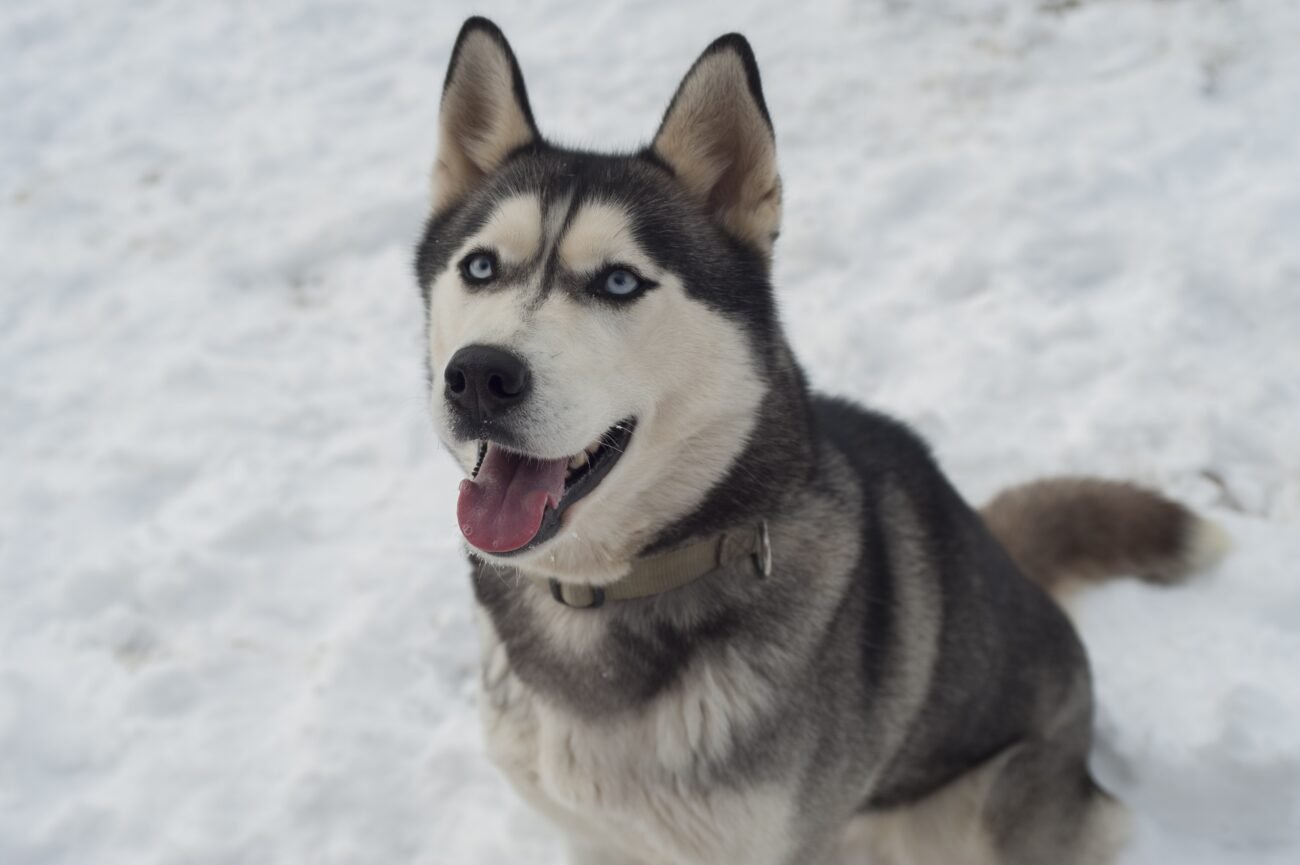
The Siberian Husky is a medium-sized working dog admired for its striking appearance, endurance, and friendly personality. Originally bred for sled pulling, this athletic breed is known for its energy, intelligence, and strong social nature.
Breed Overview
The Siberian Husky is built for speed and stamina rather than strength. Males generally measure between 53 and 60 cm in height and weigh around 20–27 kg, while females are slightly smaller at 51–56 cm and 16–23 kg. Their well-balanced body and thick double coat allow them to thrive in cold climates.
Quick Facts
- Size: Medium
- Weight: 16–27 kg
- Coat: Thick double coat
- Energy Level: Very high
- Life Expectancy: 12–15 years
- Suitable for Families: Yes
- Guard Dog: No
Personality and Temperament
Siberian Huskies are friendly, outgoing, and gentle dogs. They enjoy human company and usually get along well with other dogs. This breed is known for being playful and curious, but also independent. Huskies are not territorial and rarely aggressive, making them poor guard dogs but excellent companions.
History and Origin
The Siberian Husky originated in northeastern Asia, where it was developed by the Chukchi people to pull sleds across long distances in harsh Arctic conditions. These dogs were valued not only for their working ability but also for their close bond with families. Their endurance and speed later made them popular worldwide.
Physical Characteristics
Siberian Huskies have erect triangular ears, almond-shaped eyes, and a thick double coat. Eye color can be blue, brown, or one of each. Coat colors vary widely and often include striking facial markings. The tail is bushy and carried in a curved shape when alert.
Exercise and Activity Needs
This breed has extremely high exercise requirements. Siberian Huskies need at least two hours of vigorous activity every day. Long walks, running, hiking, and active play are essential. Without enough exercise, they may become destructive or attempt to escape.
Training and Intelligence
Huskies are intelligent but strong-willed. They learn quickly but may not always obey commands if they see no benefit. Training should be consistent, positive, and patient. Early socialization is crucial to help them develop good manners with people and other animals.
Health and Lifespan
Siberian Huskies are generally healthy dogs with good genetic resilience. However, they may be prone to certain hereditary conditions, particularly eye disorders and hip issues. Regular veterinary checkups and proper care help maintain their health. The average lifespan is between 12 and 15 years.
Feeding and Nutrition
A high-quality, balanced diet is essential for this active breed. Food portions should be adjusted according to age, size, and activity level. Huskies typically do well with two meals per day. Overfeeding should be avoided, as excess weight can affect joint health.
Grooming and Coat Care
Despite their thick coat, Siberian Huskies are relatively easy to groom. They shed moderately throughout the year and heavily during seasonal coat changes. Brushing two to three times per week is usually sufficient, while daily brushing is recommended during heavy shedding periods.
Living Environment
Siberian Huskies adapt best to homes where they receive plenty of exercise and mental stimulation. They can live in apartments only if their daily activity needs are fully met. Secure fencing is important, as Huskies are known for escaping when bored.
Compatibility with Children and Other Pets
When properly socialized, Siberian Huskies are friendly and patient with children. They generally enjoy playtime and interaction. They can live with other dogs, especially if raised together. Supervision is always recommended during interactions with young children.
Is This Breed Right for You?
The Siberian Husky is ideal for active owners who enjoy outdoor activities and can dedicate time to exercise and training. This breed is not suitable for sedentary lifestyles or owners who are away from home for long periods. With proper care, Huskies are loyal, affectionate, and energetic companions.
Frequently Asked Questions
What is the temperament of a Siberian Husky?
They are friendly, social, playful, and independent dogs.
How much exercise does a Siberian Husky need?
At least two hours of daily physical activity is recommended.
Are Siberian Huskies easy to train?
They are intelligent but independent, so training requires consistency and patience.
Do Siberian Huskies shed a lot?
Yes, they shed year-round and heavily during seasonal coat changes.
Are Siberian Huskies good family dogs?
Yes, they can be excellent family dogs when properly socialized.
Can Siberian Huskies live in apartments?
Only if their high exercise and mental stimulation needs are met daily.
