
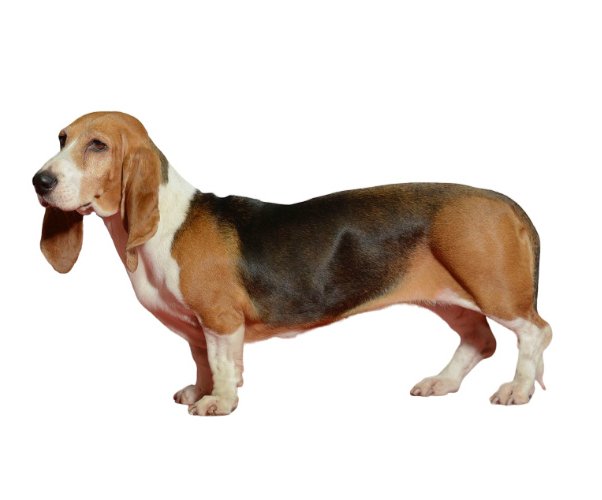
The Basset Artésien Normand: A Slimmed-Down Cousin of the Basset Hound
Unlike its more robust relative, the Basset Hound, the Basset Artésien Normand is significantly slimmer, with slightly less pronounced features. True to its breed, it is long and low to the ground, much like other members of the Basset family.
Size
Males typically stand between 26 and 36 cm (10.24 to 14.17 inches) tall.
Females also range from 26 to 36 cm (10.24 to 14.17 inches).
Weight
Males generally weigh between 15 and 20 kg (33.07 to 44.09 pounds).
Females typically range from 14 to 19 kg (30.86 to 41.89 pounds).
Color
The Basset Artésien Normand can exhibit a beautiful coat that is fawn and white or fawn with a black and white pattern.
Coat
It has a very short, tight coat that is closely cropped.
Physical Characteristics
The breed features a dome-shaped head with a well-defined stop. Its large, dark oval eyes give it an expressive look. The floppy ears are quite large and soft, while a broad black nose completes its charming appearance. The tail is long, carried like a sword, and should barely touch the ground when at rest.
Frequently Asked Questions (FAQ)
1. What is the temperament of the Basset Artésien Normand?
This breed is known for its gentle and friendly demeanor, making it a great family pet.
2. How much exercise does a Basset Artésien Normand need?
Moderate exercise is recommended, such as daily walks or playtime, though they don’t require excessive activity.
3. Are Basset Artésien Normands good with children?
Yes, they typically get along well with children and enjoy being part of family activities.
4. How often should I groom my Basset Artésien Normand?
Due to their short coat, they require minimal grooming but benefit from regular brushing to maintain coat health.
5. Do Basset Artésien Normands have any common health issues?
Like many breeds, they can be prone to certain genetic conditions, so regular vet check-ups are recommended.
6. Are Basset Artésien Normands easy to train?
They can be somewhat stubborn, so consistent, positive reinforcement training methods work best.
>
