
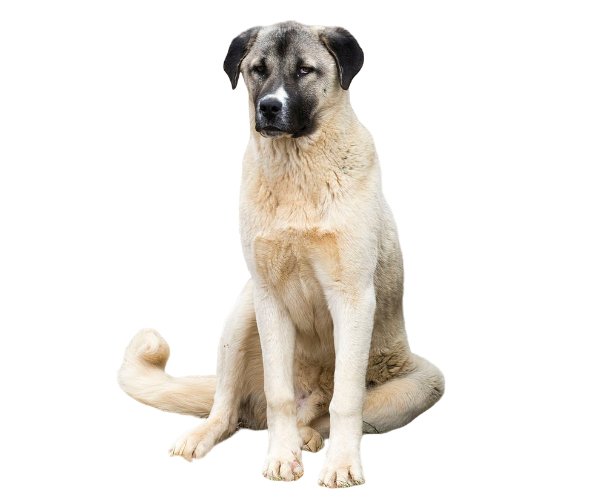
Understanding the Anatolian Shepherd Dog
The Anatolian Shepherd Dog is an impressive breed, well-known for its strength and size. Its powerful build and strong silhouette reflect the magnificence of the animal, giving off an aura of vigor that suggests both strength and bravery.
Size
Males typically stand between 74 and 81 cm (29.13 to 31.89 inches)
Females range from 71 to 79 cm (27.95 to 31.10 inches)
Weight
Males weigh between 55 and 70 kg (121.25 to 154.32 pounds)
Females have a weight range of 45 to 60 kg (99.21 to 132.28 pounds)
Color
All coat colors are possible for this breed.
Coat
The Anatolian Shepherd has a semi-long or short coat that is dense, with its length varying according to the climate. Additionally, it possesses a very thick undercoat.
Physical Traits
This breed features a broad, strong head. Its small, deeply-set eyes appear somewhat disproportionate to its head. The ears are medium-sized, triangular, and rounded at the tips, standing erect when the dog is alert and falling when it is at rest. The nose can be either black or brown, depending on the individual. When relaxed, the tail hangs low, but it typically raises upwards, with a slight curve at the tip when the dog is on guard, particularly in males.
According to the FCI classification, this dog breed belongs to Group 2, Section 2, and is designated as #331.
>
