
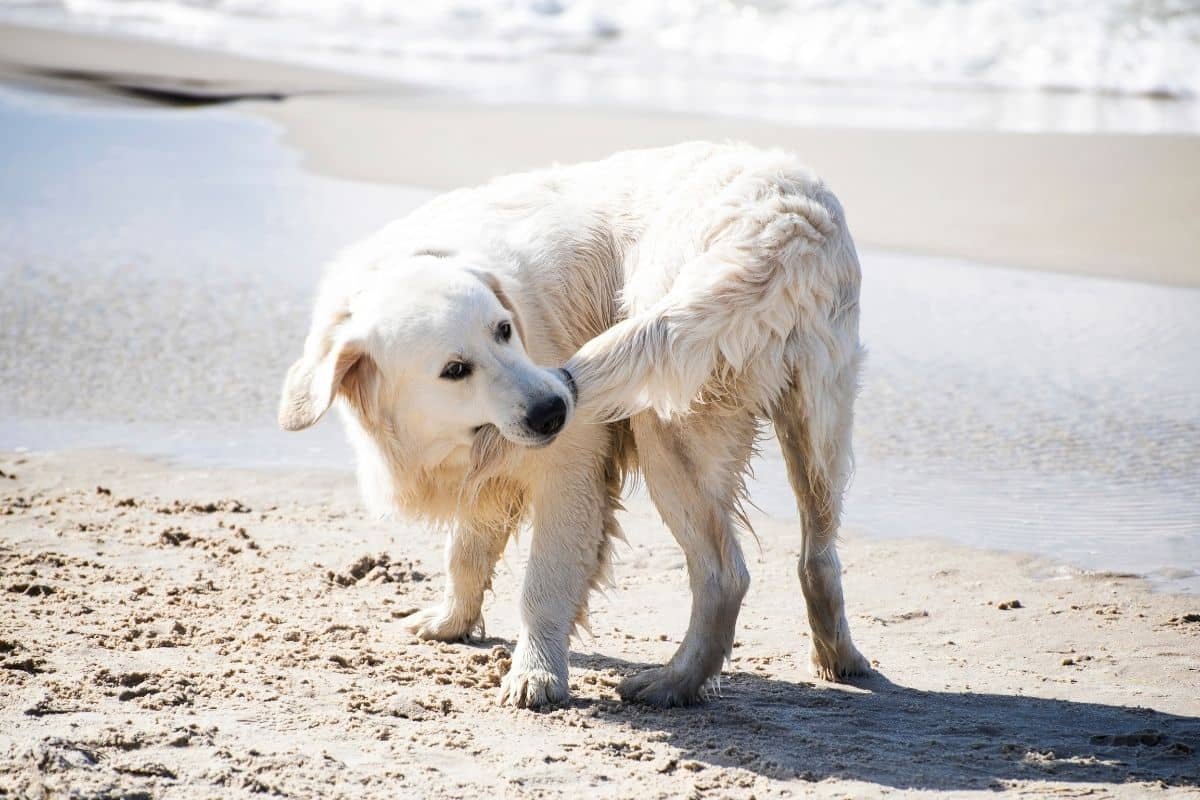
Have you ever noticed your dog suddenly chasing its tail, spinning in circles, and even biting it? What exactly is behind this odd behavior—should you be worried, or is it a harmless canine quirk?
When Tail Chasing and Biting Isn’t a Cause for Concern
Let’s start by looking at the scenarios where seeing your dog bite or chase its tail isn’t something to fret over.
Your Puppy Is Discovering Its Body Through Play
If your dog is still quite young—typically under 6 to 8 months—this behavior is completely normal. A puppy simply hasn’t quite figured out the boundaries of its own body and, for them, catching their tail is just another fun, silly game. As your puppy grows, both the fascination and the frequency of tail chasing will usually fade and disappear entirely by adulthood.
Your Dog Wants Your Attention
Sometimes, the habit of chasing or biting the tail persists into adulthood. If you laughed or engaged with your dog when it did this as a puppy, you may have inadvertently encouraged the behavior. Dogs are quick to learn what makes their humans react, so your pooch might repeat this little drama just to grab your attention or invite you to play.
Want your dog to stop? Try simply ignoring the tail chasing. When the behavior doesn’t get a reaction, your dog will likely lose interest—making it easier for you to spot if there’s ever a genuine issue.
When Tail Chasing Should Raise Red Flags
Now, let’s explore the circumstances where chasing and biting the tail could be a signal that something isn’t right.
A Sign of Stress
For some dogs, tail chasing and biting isn’t just a quirky pastime—it becomes a stress indicator. Anxious dogs may resort to this repetitive behavior much like others may chew, bark, or obsessively lick their paws. It’s important to recognize that these actions can be a way for your dog to cope with emotional turmoil.
If you notice this as a pattern in your dog’s behavior, it’s time to help them de-stress. Here are some steps you can take:
- Introduce calming toys or supplements like Bach Flower Remedies.
- Seek the help of a canine behaviorist to explore solutions tailored to your dog’s needs.
Genetic Predisposition
Research has shown that some dogs are genetically more susceptible to stress-related tail chasing. Notably, Bull Terriers and German Shepherds are two breeds especially prone to developing this behavior.
In these cases, the habit often emerges around puberty—precisely when most dogs are growing out of the phase. Without intervention, the tail chasing can worsen with age and may escalate to the point of self-harm.
For persistent or severe cases, consulting a veterinary behaviorist or veterinarian is strongly recommended. They can suggest strategies or, if necessary, prescribe anti-anxiety treatments to help your dog find calm.
Localized Discomfort or Itchiness
Sometimes, tail biting has a simple physical cause: itchiness, an injury, or irritation in the tail or hindquarters region. If your dog calms down the moment you scratch or examine the area, you’ve likely found the trigger.
Helpful tip: If your dog’s tail biting looks related to discomfort, take them to the veterinarian. The cause could be anything from a scratch or insect bite to a food allergy—you’ll want a professional diagnosis to get your dog back to feeling their best.
