
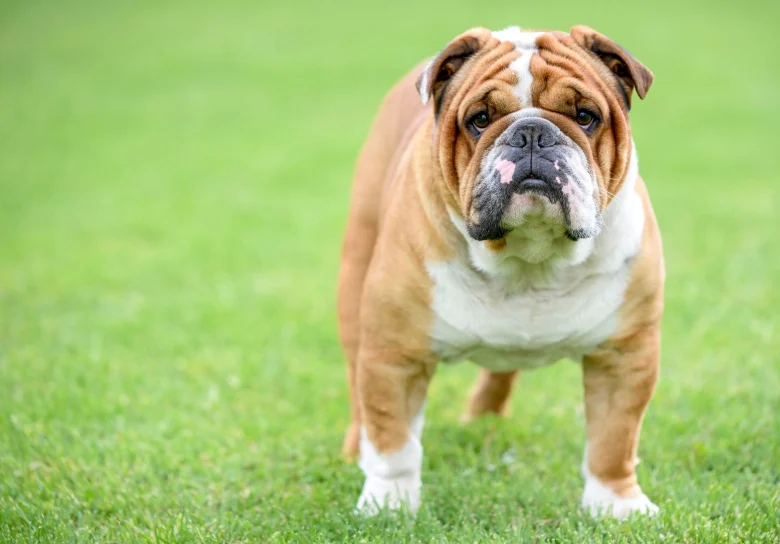
The English Bulldog is a distinctive, medium-sized dog known for its stout build, wrinkled face, and endearing personality. Despite its tough appearance, this breed is gentle, affectionate, and well-suited to family life. Bulldogs are beloved for their loyalty, calm nature, and unique charm.
Origin and History
The English Bulldog originated in England, where ancestors of the breed were used for bull-baiting centuries ago. When bull-baiting was outlawed, the breed was refined into a companion animal. Over time, breeders focused on temperament, resulting in the affectionate and patient dogs known today.
Appearance and Physical Traits
The English Bulldog has a stocky, muscular build and a distinctive appearance.
Typical features:
- Size: Medium
- Height: Around 31–40 cm (12–16 inches)
- Weight: Often 18–25 kg (40–55 lbs)
- Loose skin with deep wrinkles, especially on the face
- Short, broad muzzle
- Short, smooth coat
- Distinctive pushed-in face with a wide jaw
Bulldogs have a low-to-the-ground stance and a characteristic rolling gait. Their expressive face and compact body make them instantly recognizable.
Temperament and Personality
English Bulldogs are known for being calm, loyal, and affectionate. They form strong bonds with their family and enjoy being close to their people. While they can be stubborn at times, their affectionate nature and gentle demeanor make them excellent companions.
Bulldogs are generally friendly with children and can get along with other pets when introduced and socialized properly. They tend to enjoy moderate activity but are not overly energetic.
Training and Socialization
Bulldogs are intelligent but sometimes independent, which can make training a bit challenging. Consistent, positive reinforcement methods work best. Short training sessions that reward good behavior with treats, praise, or play are effective.
Early socialization with people and other dogs helps ensure a balanced temperament and confidence in new environments.
Exercise Needs
English Bulldogs do not require a lot of intense exercise, but they still benefit from daily walks and playtime. Moderate activity helps maintain a healthy weight and keeps them mentally engaged.
Because of their short muzzle and body structure, Bulldogs should not be overexerted, especially in hot or humid weather. Short, regular sessions are ideal.
Living Environment
Bulldogs adapt well to various living situations, including apartments. They are not overly active indoors and enjoy lounging with their family. However, they do need regular walks and opportunities for light play.
These dogs thrive on companionship and do not do well if left alone for long periods.
Grooming and Care
The Bulldog’s short coat is easy to care for, but certain areas require attention:
- Regular brushing to remove loose hair
- Cleaning of facial wrinkles to prevent irritation
- Routine nail trimming, ear care, and dental hygiene
Special care of skin folds is essential to prevent moisture buildup and potential infections.
Health and Lifespan
English Bulldogs are generally sturdy, but their unique body shape can predispose them to specific health concerns:
- Breathing difficulties due to brachycephalic (short-muzzled) structure
- Overheating
- Joint and hip issues
- Skin fold irritation
- Eye problems
Regular veterinary checkups and proactive care help manage many of these conditions. Their lifespan typically ranges from 8 to 12 years with good care, diet, and exercise.
Compatibility With Children and Families
English Bulldogs are often excellent family pets. They tend to be patient and gentle with children. Their relaxed nature makes them great companions for both adults and kids. Supervision is recommended with very young children, as with any breed.
Frequently Asked Questions
1. Are English Bulldogs good with children?
Yes. With proper socialization and supervision, they are often gentle and patient with kids.
2. How much exercise does a Bulldog need?
Moderate, daily walks and light play are usually sufficient to keep a Bulldog happy and healthy.
3. Is the English Bulldog easy to train?
They are intelligent but can be stubborn. Positive reinforcement and short sessions work best.
4. Do Bulldogs shed a lot?
They shed moderately. Regular brushing helps manage loose hair.
5. Do Bulldogs overheat easily?
Yes. Because of their short muzzle, Bulldogs are sensitive to heat and should not be overexerted in warm weather.
